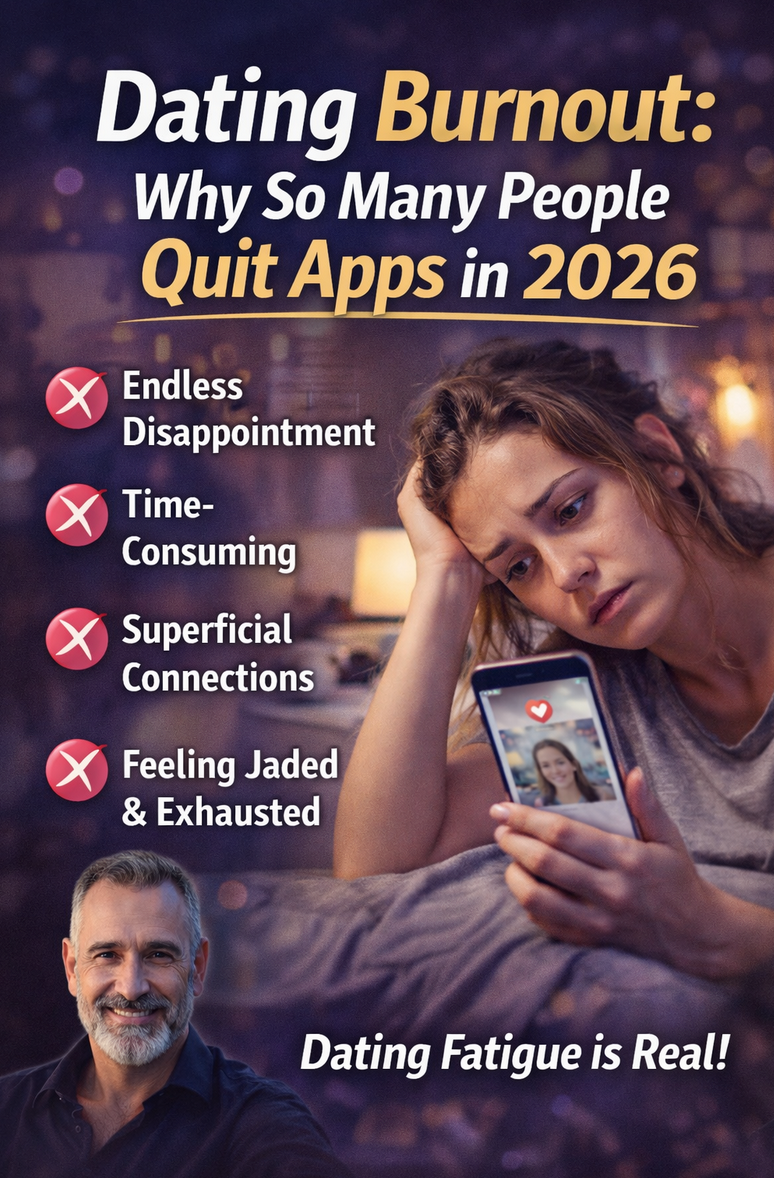
By 2026, something became impossible to ignore in the UK dating world:
People weren’t failing at dating apps.
They were burning out from them.
Quietly. Gradually. One unread message at a time.
And the more honest adults became with themselves, the clearer it was — the problem wasn’t effort.
It was the system.
Dating Apps Were Built for Engagement — Not Fulfilment
Most dating apps aren’t designed to help you finish dating.
They’re designed to keep you:
- swiping
- matching
- checking notifications
- hoping the next conversation will be different
This creates constant stimulation with very little reward.
In 2026, many UK users finally recognised the pattern:
“I’m busy on apps… but nothing is actually happening.”
That gap is where burnout begins.
The Emotional Cost Nobody Talks About
Dating burnout isn’t just frustration. It’s emotional fatigue.
People report:
- feeling disposable
- losing excitement before dates
- assuming silence means rejection
- becoming emotionally guarded
When this repeats often enough, something shuts down.
You stop expecting connection.
You stop investing properly.
You stop enjoying it.
Not because you don’t want intimacy —
but because you’re tired of false starts.
Choice Overload Is Exhausting, Not Liberating
More options were meant to make dating easier.
Instead, they created:
- indecision
- comparison
- shallow engagement
- constant second-guessing
When everyone feels replaceable, no one feels chosen.
By 2026, many UK adults realised that endless choice wasn’t empowering — it was paralysing.
Ghosting Became Normalised (And That Hurt)
One of the biggest contributors to dating burnout is how normal ghosting became.
Not replying.
Disappearing mid-conversation.
Vanishing after intimacy.
When this happens repeatedly, people internalise it — even when they know better.
Burnout isn’t about one bad experience.
It’s about too many small dismissals.
Why Mature Daters Quit First
Interestingly, adults over 30 were the first to step away.
Why?
- they value time more
- they recognise emotional patterns
- they’re less willing to chase validation
- they want outcomes, not dopamine
Many didn’t quit dating — they quit apps.
They wanted something calmer. Clearer. More intentional.
The Shift Toward Intentional Sex Dating
This is where platforms like Real Sex Contacts come in.
Instead of pretending everyone wants the same thing, intentional platforms acknowledge reality:
- some people want sex without confusion
- some want connection without pressure
- some want both — honestly
When expectations are clear, burnout drops dramatically.
People relax.
Conversations improve.
Meetings actually happen.
Burnout Isn’t a Personal Failure
One of the most important things to say is this:
If you feel exhausted by dating apps, nothing is wrong with you.
Burnout is a natural response to:
- emotional unpredictability
- low-quality interactions
- constant comparison
- lack of closure
Stepping back isn’t quitting — it’s recalibrating.
What Actually Helps in 2026
People who recover from dating burnout tend to:
- reduce volume, increase quality
- choose platforms with clear intentions
- communicate boundaries earlier
- stop chasing ambiguous connections
Dating starts working again when it stops feeling like work.
Final Thought
Dating burnout isn’t about giving up on connection.
It’s about refusing to stay in systems that drain you.
In 2026, more UK adults are choosing:
- fewer conversations
- better alignment
- honest intentions
- real-world outcomes
And when dating becomes intentional again —
desire, energy, and excitement quietly return.
Not louder.
Not faster.
Just healthier.