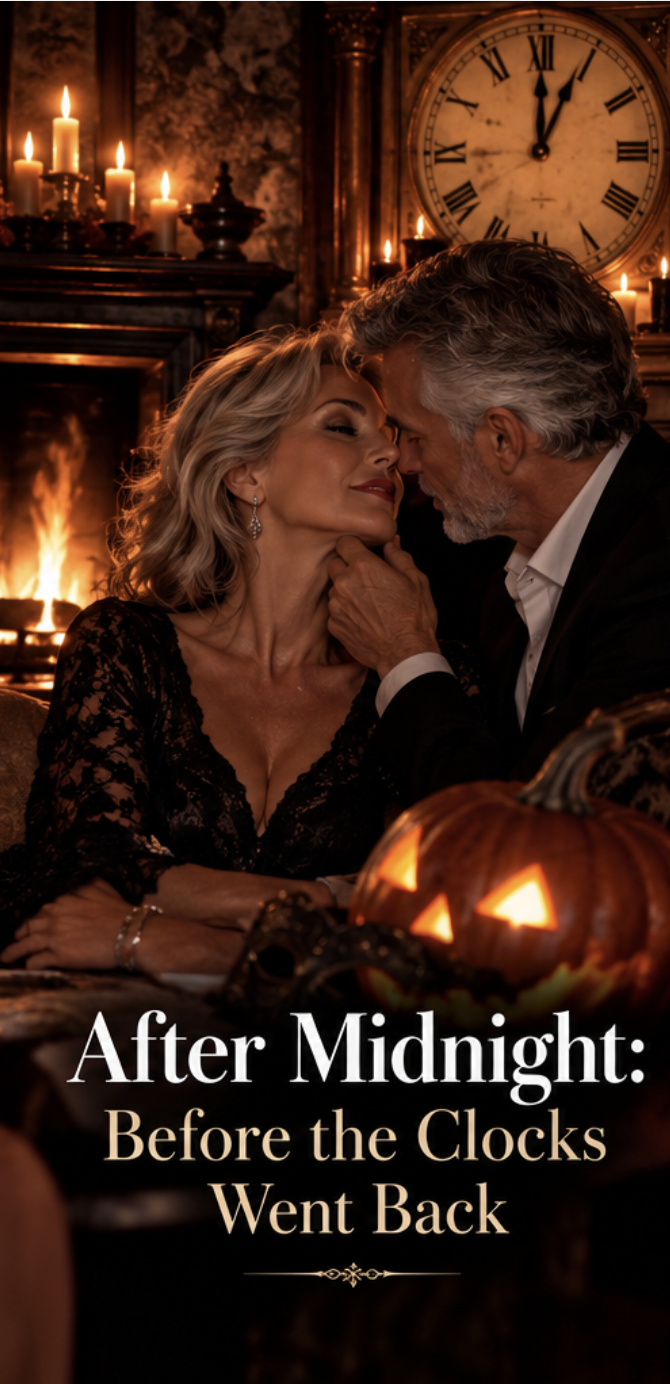
At fifty-eight, Eleanor had become very good at leaving on time.
Dinner ended.

She left.
Drinks ended.
She left.
A date stopped being interesting.
She definitely left.
There was something liberating about finally understanding that staying too long out of politeness was simply another form of wasting your own life.
So when she looked at the clock above the fireplace and saw 12:54am, she reached for her handbag.
“I should go.”
The man sitting opposite her frowned.
“Already?”
“We’ve been here four hours.”
“That explains why I like you more than I did at eight.”
She smiled.
“That line almost worked.”
“Almost?”
“Give it another hour.”
He glanced at the clock.
“Funny you should say that.”
“What?”
“The clocks go back tonight.”
She paused.
Then remembered.
October 25.
The last Sunday in October.
Summer time disappearing while most of Britain slept.
At two in the morning, one o’clock would come back.
An hour returned.
She looked at him.
“Are you suggesting daylight saving time as a reason I should stay?”
“I’m suggesting the universe has become unusually generous.”
She laughed.
His name was David.
Sixty-one.
Widowed four years.
Grey hair, intelligent eyes, dark wool jacket.
They had met online nine days earlier.
He had suggested dinner at an old hotel outside Oxford, the sort of place with stone fireplaces, uneven floors and enough history to make every corridor slightly eerie in late October.
Pumpkins sat on the front steps.
Black candles burned in the bar.
Outside, wind pushed rain against leaded windows.
Inside, she had stayed much longer than intended.
That worried her slightly.
The Dangerous Thing About a Good Date
Bad dates are simple.
You go home.
Good dates require decisions.
Do you stay for another drink?
Do you reveal more?
Do you let attraction become obvious?
Do you agree to another meeting before the first is even finished?
At twenty-eight, Eleanor had trusted impulse.
At fifty-eight, she trusted observation.
Tonight both were telling her the same thing.
Stay.
One More
“One drink,” she said.
David nodded gravely.
“One.”
“You’re pleased with yourself.”
“Very.”
“That may still make me leave.”
“It’s a risk.”
She ordered red wine.
He ordered coffee.
“That is deeply unattractive,” she said.
“What is?”
“Coffee after midnight.”
“I’m driving.”
She considered that.
“Responsible.”
“Worse?”
“Much.”
He smiled.
The ease between them had appeared slowly.
Not fireworks.
Something more dangerous.
Comfort.
By the time she realised she had stopped checking the room and started only watching him, the evening had shifted.
The Question About Starting Again
He asked it at 1:13.
“Were you nervous about dating again?”
She turned the wine glass between her fingers.
“Yes.”
“What part?”
“All of it.”
He waited.
She appreciated that.
He did not immediately fill the silence.
“I was married twenty-seven years,” she said. “You become accustomed to being known.”
He nodded.
“And then suddenly someone asks what music you like, as though you’re twenty-two.”
He laughed softly.
“Yes.”
“It’s strange.”
“It is.”
She looked at him.
“What about you?”
“Terrified.”
She smiled.
“You don’t seem terrified.”
“I’ve had four years of practice hiding it.”
Something in his expression stopped the joke becoming too light.
She reached across the table and touched his hand.
Not romantically at first.
Simply acknowledgment.
He looked down.
Then turned his hand beneath hers.
Their fingers closed.
Neither mentioned it.
The Hour Before
At 1:26, the hotel was almost silent.
Most guests had disappeared upstairs.
The bar staff had begun preparing to close.
Outside, October branches moved against the dark glass.
“You realise,” David said, “we are approaching the bonus hour.”
“Please stop calling it that.”
“What would you prefer?”
“The hour the government reluctantly gives back after stealing it in March.”
“Less romantic.”
“More accurate.”
He laughed.
She liked making him laugh.
That surprised her.
Not because she disliked humour.
Because for years she had thought attraction was supposed to arrive as nervousness.
With David it arrived as relaxation.
She had forgotten that could happen.
1:41
He looked at her hand still resting in his.
“May I ask you something slightly inappropriate?”
“At our age?”
“Fair point.”
“Ask.”
“Would you like me to kiss you?”
There it was.
No performance.
No attempt to manufacture a moment.
Just the question.
She looked at him.
He was nervous now.
She could see it.
That made her feel strangely tender toward him.
“Yes,” she said.
The answer visibly surprised him.
“That sounded very confident.”
“It was.”
He stood.
She did too.
They were alone beside the fireplace.
The flames had burned low.
He touched her face lightly.
Then kissed her.
Softly.
Carefully.
She had expected something tentative.
Instead, halfway through, her hand moved to the front of his jacket and she pulled him closer.
The kiss changed.
Warmth.
Recognition.
The peculiar shock of discovering desire had not disappeared simply because life had become older and more complicated.
When they separated, she laughed under her breath.
“What?”
“Nothing.”
“That was definitely something.”
“I’d forgotten.”
“What?”
She looked at him.
“That this part still feels exactly the same.”
He understood immediately.
“Good.”
“Yes,” she said.
“Very.”
Before the Clocks Went Back
They sat again.
Closer now.
The chairs had somehow become ridiculous, so they moved to the sofa beside the fire.
Her shoulder rested against his.
His hand remained around hers.
No urgency.
That was what she liked.
They had nothing to prove.
At twenty-five, an hour felt endless.
At fifty-eight, an hour had value.
That made it more intimate, not less.
“Five minutes,” David said.
She looked up.
1:55.
The strange thing was that neither actually needed the extra hour.
The date was already good.
The clock change merely gave them permission to acknowledge they did not want it to end.
1:59
They watched the clock.
“This is absurd,” Eleanor said.
“We’re adults.”
“Allegedly.”
The minute hand moved.
Two o’clock should have arrived.
Instead, phones adjusted.
1:00.
Again.
David looked at his screen.
“There.”
She stared at hers.
A whole hour reappeared.
She shook her head.
“I know logically what happened.”
“But?”
“It still feels slightly magical.”
He looked at her.
“Good.”
She smiled.
“You were waiting for me to say that.”
“Yes.”
The Extra Hour
They spent it talking.
Not about dating.
Not really.
They talked about children.
Travel.
His late wife.
Her divorce.
Places they still wanted to see.
The books neither had finished.
The fact that both secretly disliked New Year’s Eve.
Things people reveal once they stop trying to impress each other.
At 1:32, the second 1:32, he asked:
“Would you come here again?”
She smiled.
“With you?”
“Preferably.”
“Yes.”
“When?”
She considered pretending to check her calendar.
Instead:
“Friday.”
“Very decisive.”
“I’m fifty-eight.”
“And?”
“I don’t see much value in pretending I don’t know when I want something.”
He smiled.
“That may be the most attractive thing you’ve said tonight.”
“Only tonight?”
“I’m trying not to overdo it.”
Going Home
At 1:51 GMT, they finally stood.
This time she genuinely needed to leave.
He walked her to the entrance.
The rain had stopped.
The night outside felt colder now, as though autumn had used the clock change to become winter while nobody was watching.
Her taxi waited beneath the lamps.
David opened the door for her.
She did not get in immediately.
“You know,” she said, “I usually leave when I say I’m going to.”
“I gathered.”
“You kept me an extra hour.”
“Technically the clocks did.”
She stepped closer.
“No.”
Then she kissed him.
More confidently than before.
When she pulled back, she smiled.
“You did.”
She got into the car.
As it moved away, she looked through the rear window.
He was still standing there.
For years she had thought starting again meant somehow returning to the beginning.
It did not.
You did not become twenty-five again.
You arrived with everything that had happened in between.
Loss.
Love.
Mistakes.
Confidence.
History.
Perhaps that was why this felt better.
The clocks had gone backwards.
She hadn’t.
And somewhere in the extra hour between summer time and winter, she had found herself looking forward instead.